
· by Michael Blair, Nashville's Pool & Spa
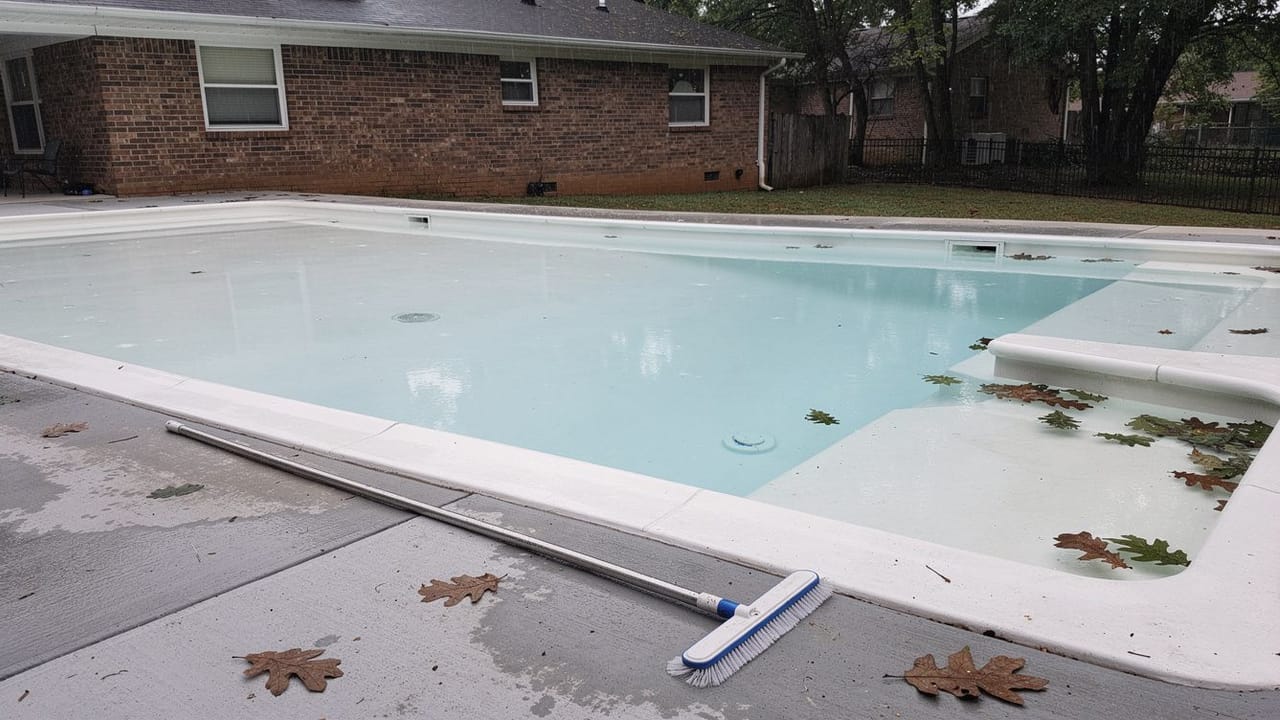
Cloudy water means something is hanging in the pool that the filter is not removing and the chlorine is not clearing. On our weekly pool service visits we work through the causes in the same order, chemistry first and the equipment second, because dosing before you know which reading is off is how a pool ends up both cloudy and overtreated.
What should you test when pool water is cloudy?
We test free chlorine, pH, total alkalinity, calcium hardness and cyanuric acid before anything goes in the water. The CDC’s Model Aquatic Health Code, which is written for public pools rather than homes, has total alkalinity tested weekly, and calcium hardness and cyanuric acid tested monthly where cyanuric acid is used. Cloudiness with plenty of chlorine is a different problem from cloudiness with none.
High pH is one common cause. The same code keeps pH between 7.0 and 7.8 and notes that as pH is raised, chlorine disinfectants decrease in effectiveness, so a pool can show a decent chlorine reading and still be poorly sanitized. Balance matters too: the code’s saturation index describes the water’s ability to deposit calcium carbonate or to dissolve metal, concrete and grout, which is why we read pH together with calcium hardness and alkalinity and never on its own.
Filtration and circulation
If the readings are in range and the haze stays, circulation is next, and there is no one run time that suits every backyard pool. ENERGY STAR’s pool pump page says running the filter 6 hours a day instead of 24 cuts energy use by 75%, that several short cycles can keep a pool clean all day where one 6-hour run leaves 18 hours for debris to collect, and that the slower filtration rates of variable-speed and multi-speed pumps filter the water more effectively. Our post on single-speed and variable-speed pumps goes through that choice.
Then we check the filter itself. We compare the pressure gauge with its reading when the filter was last clean, then look at the media: a cartridge that needs cleaning, a sand bed that needs backwashing, or DE grids that need recharging. A torn grid, a cracked lateral or a pump that will not prime is a repair, and that is our equipment repair work.
A clarifier comes last. In the public-pool code, clarifiers and flocculants have to be certified to NSF/ANSI Standard 50 or 60, and coagulants are fed in ahead of the filters, so the filter still has to catch whatever they gather.
- Test the full panel before adding anything
- Bring pH back between 7.0 and 7.8 first
- Run the pump in shorter cycles across the day while the water clears
- Clean the cartridge, backwash the sand or recharge the DE
- A clarifier only helps a filter that is working
Cyanuric acid lock
Cyanuric acid, sold as stabilizer, goes into outdoor pools because of the sun, and the public-pool code lists hours of sunlight exposure and stabilizer use side by side among the inputs for designing chlorine feed. It also raises the chlorine a pool needs: the code’s minimum free chlorine is 1.0 ppm in water without cyanuric acid and 2.0 ppm in water with it. It caps cyanuric acid at 90 ppm and requires a pool to close at 300 ppm or higher.
Lock is the trade’s word for stabilizer built up so far that chlorine at an ordinary reading stops keeping up. The code has pools on stabilized chlorine measure it weekly or more often, and calls for a test 24 hours after any is added. When we find it high, we bring it down by draining part of the pool and refilling with fresh water. It is one of the first things we test on a pool that will not hold chlorine however often it is dosed. A saltwater pool gets the same test, because its cell makes chlorine from the salt rather than doing without it, as our comparison of saltwater and traditional chlorine pools explains.
What should you do to a pool after heavy rain?
After a heavy storm we retest the full panel before treating anything, since the numbers from before the rain no longer describe the water in the pool. Then we brush the walls and floor and run the filter longer for a couple of days, in shorter cycles where the pump allows it.
If the water is still hazy once the readings are back in range, we go back to the filter and treat it like any other cloudy pool. When it will not clear, or you would rather not chase it yourself, get in touch for a free estimate.
Sources
- CDC, Model Aquatic Health Code, 5th Edition (2024), Code Language — Public-pool guidance: pH 7.0 to 7.8 and chlorine loses effectiveness as pH rises; saturation index definition; test frequencies for alkalinity, calcium hardness and cyanuric acid; minimum free chlorine 1.0 ppm without and 2.0 ppm with cyanuric acid; cyanuric acid at or below 90 ppm, closure at 300 ppm; sunlight and stabilizer as chlorine-feed design inputs; clarifier and flocculant certification, coagulants fed ahead of filters; six-hour turnover for public pools
- ENERGY STAR, Pool Pumps — Six hours versus 24 cuts energy use 75%; several short cycles keep a pool clean all day; slower filtration rates filter more effectively; half speed uses one-eighth the energy
FAQ
Why Pool Water Goes Cloudy, and What to Test — questions
Why is my pool cloudy even with chlorine in it?
High pH is one common reason, because chlorine loses effectiveness as pH rises, so a reading that looks fine can still be doing too little. After that we look at the filter and how long the pump runs, then at cyanuric acid, which raises the free chlorine a pool needs. Test the full panel before adding anything else.
How long should a pool pump run?
There is no single figure for a home pool. ENERGY STAR notes that running the filter 6 hours a day instead of 24 uses 75% less energy, and that several shorter cycles keep a pool cleaner through the day than one long run. It also says a pump at half speed uses about one-eighth the energy, so a variable-speed pump running longer and slower costs less to run. The six-hour turnover in the CDC’s code is written for public pools, so we set a backyard pool’s schedule by its pump and by how the water looks.
What is cyanuric acid lock?
It is the trade’s name for stabilizer built up so high that chlorine at an ordinary reading no longer keeps the water clear. The CDC’s public-pool code doubles the minimum free chlorine once stabilizer is in the water, caps cyanuric acid at 90 ppm and requires closure at 300 ppm or more. We bring it down by partly draining and refilling, and we add stabilizer only when a test calls for it.
What clears up cloudy pool water?
Correcting whichever reading is off, then getting the filter working. Bring pH back between 7.0 and 7.8, run the pump in shorter cycles across the day, and clean the cartridge, backwash the sand or recharge the DE. A clarifier helps only after that, since the filter still has to catch what it gathers.