
· by Michael Blair, Nashville's Pool & Spa
Heating stretches a pool season at both ends, into the cooler weeks of spring and fall. Which option suits you depends on whether you want warmth on demand or warmth cheaply, and the second part turns on your gas and electric rates as much as on the equipment.
How does a heat pump pool heater work?
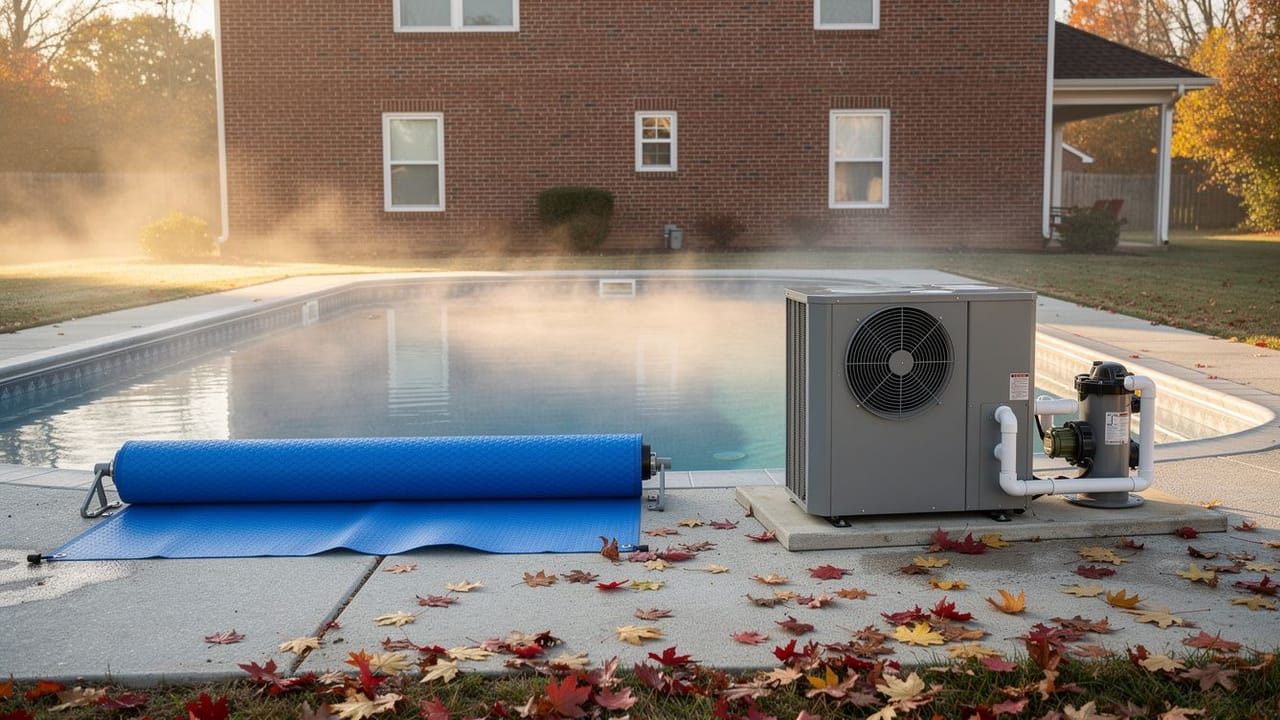
A heat pump pulls heat out of the surrounding air and moves it into the water, which in warm, humid air is very efficient. The Department of Energy’s 2023 final rule on consumer pool heater standards notes that many heat pump pool heaters are rated at a coefficient of performance (COP) of 6.0, which it counts as a thermal efficiency of 600 percent. Those ratings are taken at the test standard’s high air temperature, mid humidity condition, so a unit working on a cool April morning will not match its rated figure.
The same rule says heat pumps perform best in high air temperature and humidity but can still work effectively in cooler climates during the swimming season, and that the rare day too cold for one can be handled with an electric resistance backup element. If you plan to swim well into October, ask whether the maker publishes a rating at a lower air temperature as well as the headline number.
Gas heaters
A gas heater burns natural gas or propane, so it makes its own heat instead of borrowing it from the air. In that rule, DOE describes a heater that just meets the current federal standard as one with 82 percent thermal efficiency. Pool heaters have had to meet federal efficiency standards since 1990, and the Department of Energy’s consumer pool heater page says compliance with the amended standards is required on and after May 30, 2028.
Which one costs less to run is arithmetic. A gas heater near the minimum turns about 82 percent of its fuel into heat; a heat pump rated at a COP of 6.0 moves about six units of heat for each unit of electricity it uses, and your rates decide what each unit costs. One thing to look for on an older gas unit is a standing pilot light, which DOE notes keeps burning when the heater is not in use. If the old heater is worth fixing instead of replacing, that is our equipment repair work, where a heater gets diagnosed before anyone suggests a new one.
- Heat pump: draws heat from the air, rated in warm, humid test conditions
- Gas: burns natural gas or propane, at least 82 percent thermal efficiency today
- Solar: no fuel to buy, heat only while the sun is on the panels
- Cover: DOE assumes it can save up to 50 to 70 percent of energy use
How does solar pool heating work?
Solar panels, usually on a roof, warm the pool water the pump sends up through them. There is no fuel to buy, and the pump is what draws power, so our post on single-speed and variable-speed pumps covers the part of the bill that solar still runs up.
It needs enough open roof that the sun reaches for most of the day, and it gives heat only while the sun is on the panels. A cloudy week before a party is a week without much heat, which some households mind and others do not.
The cover matters more
In the cost analysis behind its 2023 pool heater rule, DOE assumed a pool cover can save up to 50 to 70 percent of overall energy use. That is an assumption and the top of a range, not a measurement of your pool. It holds whichever heater you choose, which is why we would put a cover on the list before the heater.
Covers come up again at the other end of the year, and our post on opening and closing a pool in Middle Tennessee goes through the fall routine. When you want a price on a heater, a cover or both, ask us for a free estimate.
Sources
- U.S. Department of Energy, Energy Conservation Standards for Consumer Pool Heaters; Final Rule, 88 FR 34624 (May 30, 2023) — Heat pumps rated at COPs of 6.0 at the high air temperature, mid humidity test condition; perform best in warm, humid air but work in cooler climates during the season, with electric resistance backup for rare cold cases; 82 percent baseline gas efficiency; standing pilots burn when not in use; DOE assumes a cover can save up to 50 to 70 percent of overall energy use
- U.S. Department of Energy, Consumer Pool Heaters — Federal standards for pool heaters since 1990; compliance with the amended standards required on and after May 30, 2028
FAQ
Heating a Pool in Middle Tennessee — questions
What is the cheapest way to heat a pool?
It depends on how you use the pool and on your gas and electric rates. Solar has no fuel bill, but it needs open roof space and heats only in sunshine. A heat pump rated at a COP of 6.0 gives about six units of heat per unit of electricity in warm, humid test conditions, while a gas heater at the current federal minimum turns about 82 percent of its fuel into heat. Whatever you pick, add a cover, since the Department of Energy assumes one can save up to 50 to 70 percent of overall energy use.
Do pool heat pumps work in Middle Tennessee?
Yes, through the swimming season, with limits. The Department of Energy says heat pump pool heaters do best in warm, humid air but can still work effectively in cooler climates during the season, and that the rare day too cold for one can be covered by an electric resistance backup element. Their efficiency ratings come from warm test conditions, so a chilly spring or fall morning gets less out of one than the label shows.
How much does a pool cover help?
A lot, by the Department of Energy’s reckoning. In its 2023 pool heater rule it assumed a cover can save up to 50 to 70 percent of overall energy use. That is an upper range used in an analysis, so read it as what a cover can do rather than a promise for every pool, but it applies whichever heater you run.
How does a pool heater work?
A heat pump draws heat from the surrounding air and moves it into the water, a gas heater burns natural gas or propane to make its own heat, and solar panels warm the water the pump sends up through them. Each suits a different need: efficiency in warm air, heat on demand, or no fuel bill.