
· by Michael Blair, Nashville's Pool & Spa
The National Weather Service’s Nashville climate records count an average of 67 days a year when the low drops to 32°F or below, and nearly all of them come between November and March. We time both ends of the pool season around that window, and both ends need doing properly.
How do you close a pool for winter?
On a closing we balance the water first, then lower it below the skimmer, blow out and plug the lines, and drain the pump, filter and heater before the cover goes on. Each of those pieces of equipment has its own winterizing steps in the owner’s manual, and where the manual is specific, we follow it rather than habit.
The plumbing gets the same care as the pump. The pump sits out on the pad where you can see it; the lines run under the deck, and whatever water is left in them stays there until spring. If something did crack over a past winter, that is the work of our equipment repair crews. A hot tub on the same patio is a different winter job, because it usually stays full and heated through the cold months, and our post on keeping a hot tub clear through winter covers its water care and what to do when the power goes off in a freeze.
When is the right time to close a pool here?
We close once swimming is done and the weather has turned for good, not during a warm spell when the pump still has work to do. The same NWS records put Nashville’s average first freeze on November 11 and average eight days at or below freezing in November, so most of our closings land between late October and early November.
October freezes are rare, averaging one day a year, but they do happen: the earliest first freeze on the Nashville record came on October 2, 1984. A pool with its lines still full on a night like that is the one we worry about, which is why we would rather be a week early than a week late.
- Balance the chemistry before closing, not after
- Water below the skimmer, lines blown out and plugged
- Pump, filter and heater drained to the manual’s steps
- Close by early November, ahead of the average November 11 freeze
- Open in April, after the average last freeze on March 31
When should you open a pool in Middle Tennessee?
Nashville’s average last freeze falls on March 31, and the latest on record was April 25, 1910, so we schedule openings for April. That is earlier than most people want to swim, and it is on purpose: we would rather have the pump running and the chemistry coming in during the first warm weeks than leave the water sitting still under a cover into June.
An opening runs in reverse. We put the plugs back, prime the pump, follow each manufacturer’s start-up steps, and run the filter continuously for a day or two before we start balancing the water. From then until the next close, weekly pool service keeps the readings written down.
The cover
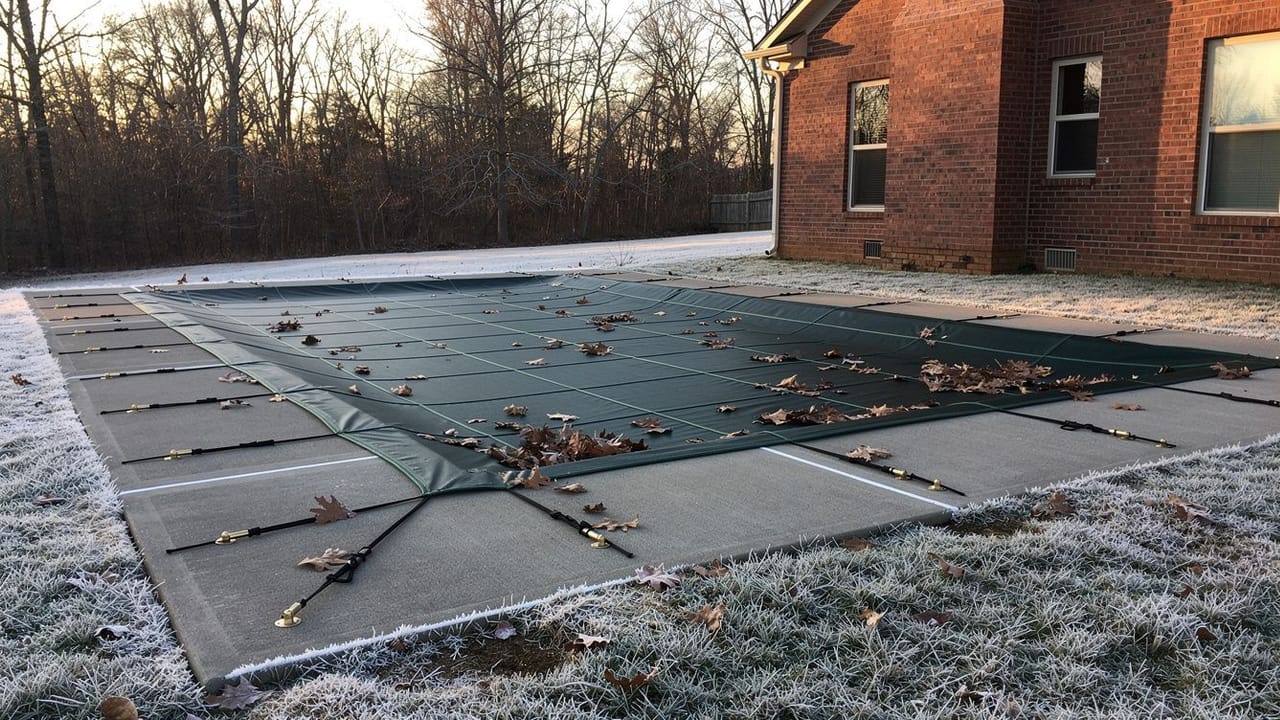
Through the winter we pump standing water off the cover, clear the leaves that land on it, and check that it is still seated where it should be. Leaves bring their own trouble into the water, which our post on fall leaves and tannin stains goes into.
In a household with young children we recommend a safety cover over a plain winter cover. ASTM F1346, the standard that sets the requirements and performance tests for safety covers, says it is intended to reduce the risk of drowning by keeping children under five away from the water, provided the cover is installed and used as its manufacturer instructs. The rest of what keeps a pool safe is in our post on pool safety beyond the fence, and if you would like us to close your pool this year, ask us for a free estimate.
Sources
- National Weather Service Nashville, Nashville Climate Records (BNA) — Average 67 days a year with a low at or below 32°F, by month (1 in October, 8 in November, 1 in April); average first freeze November 11, earliest October 2, 1984; average last freeze March 31, latest April 25, 1910
- ASTM International, F1346-23 Standard Performance Specification for Safety Covers and Labeling Requirements for All Covers for Swimming Pools, Spas and Hot Tubs — Safety covers are intended to reduce the risk of drowning by inhibiting access of children under five to the water, when installed and used per the manufacturer’s instructions
FAQ
Opening and Closing a Pool in Middle Tennessee — questions
When should I close my pool in Nashville?
Most of ours close between late October and early November. National Weather Service records give November 11 as the average date of the first freeze here, with the earliest on record on October 2, 1984, so we aim to have the lines drained before mid-November rather than wait for a cold snap to force the job.
Do I really need to blow out the lines here?
Yes. A Nashville winter brings, on average, 67 days when the low reaches freezing or below, mostly from November through March, and we would rather nothing in the plumbing, pump, filter or heater is holding water on any of them. Whether freeze damage is covered depends on your equipment warranty, so read it before you count on it, and follow each manual’s winterizing steps.
When should I open the pool?
Usually in April. Nashville’s average last freeze is March 31, and April averages a single day at or below freezing, with the latest on record on April 25, 1910. Opening then gives the pump and filter time to run and the chemistry time to settle before anyone wants to swim.
What is included in a pool opening?
We put the plugs back in the lines, prime the pump and follow each manufacturer’s start-up steps for the equipment. Then the filter runs continuously for a day or two before we start balancing the water, and from that point weekly service keeps the readings written down until the next closing.