
· by Michael Blair, Nashville's Pool & Spa
Pool safety works in layers, on the assumption any single one can fail. The people who write the equipment standards think so too: ASTM F2208, the specification for residential pool alarms, says an alarm is not meant to replace adult supervision, fences, gates or locks. The barrier is the layer the code spells out, so it is where we start.
What barrier does Nashville require around a pool?
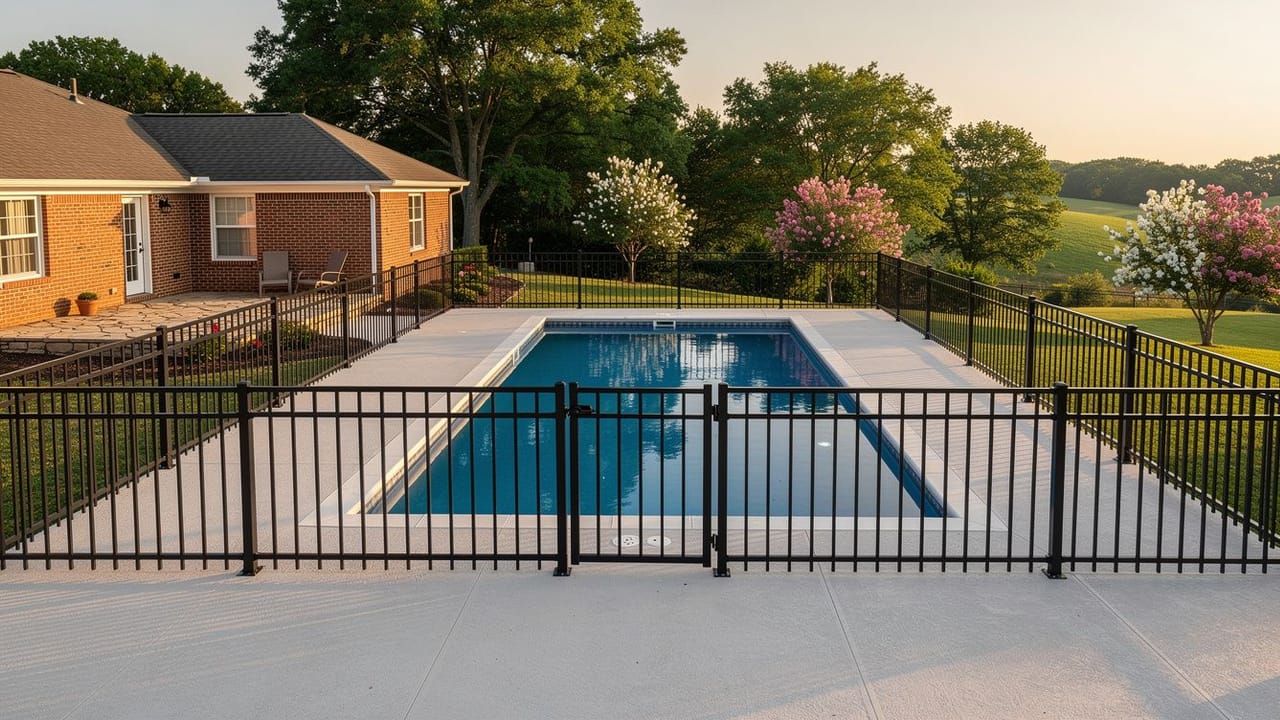
In Davidson County, Metro Codes’ pool permitting page sends barrier and fencing questions to the International Swimming Pool Code, and its link lands on Section 305 of the 2018 International Swimming Pool and Spa Code. That is the section we build a new pool’s enclosure to. The gate is the part that has to keep working for years: the Cochrane review of pool fencing calls for secure, self-latching gates, and a gate that is propped open or no longer catches on its own leaves a hole in an otherwise good fence.
Metro’s rules are worth confirming rather than assuming, and the same page directs residential building code questions to the building division at 615-862-6550. It also says a pool that was permitted before can be replaced at exactly the same size and location without a new pool permit. That line is about the permit. It does not tell you whether the fence around an older pool meets today’s barrier section, and that is a question we put to the building division for the address before we rely on the old fence.
Layers beyond it
Tennessee already makes the alarm part of the paperwork: a receipt for a pool alarm, under Tennessee Code § 68-14-804, is one of the items Metro asks for with a pool permit application. Its page does not say which kind. ASTM F2208 covers four types (a surface alarm floating on the water, a subsurface alarm below it, a perimeter alarm that watches the edge of the pool, and a personal immersion alarm), each meant to detect a child one year of age or older going into the water. Where a house door opens straight onto the pool, we also suggest an alarm on that door. For the cover, the one to want is a safety cover that meets ASTM F1346, a specification written to keep children under five out of the water, rather than a floating one.
Then there is the layer no piece of equipment stands in for: one adult whose only job is watching the water, rather than everyone at the party assuming somebody else is. Adult supervision is the first thing the alarm standard names among the measures an alarm does not replace.
- A barrier built to the code section Metro points to, with self-latching gates
- A pool alarm, plus an alarm on any house door that opens onto the pool
- A safety cover that meets ASTM F1346, not a floating cover
- One adult watching the water with nothing else to do
Where do most pool safety setups fall short?
The gap we check for first is direct access from the house. Where a door opens onto the pool area inside the barrier, the fence gives far less protection against a child who lets themselves out the back. The Cochrane review found isolation fencing, which encloses the pool alone and separates it from the house, superior to perimeter fencing around the whole property; comparing a pool with isolation fencing to one fenced on three sides, it put the odds ratio for drowning at 0.17. The review was published in 1998 and its search was last updated in 2006.
On a house whose back door opens inside the fence, an alarm on that door and a closer that pulls it shut are worth checking. On a new build it is easier to fix with the layout, and when we plan a new inground pool the fence line is drawn so the house sits outside it. If you are replacing the deck around an existing pool, our post on pool deck work covers what a deck job means for the barrier.
Covers
A floating solar cover is not a safety cover. ASTM F1346 sets performance tests that a safety cover has to pass and marking requirements that apply to every pool cover, so the label on the cover is the place to find out which one you own.
The distinction matters, and the two get confused because both are called covers. What goes on the pool at closing time is part of our post on opening and closing a pool here, and if you would like the fence, the gates and the cover looked at together, ask us for a free estimate.
Sources
- Metro Nashville Codes, Pool Permitting — Barrier and fencing requirements in the International Swimming Pool Code (link to Section 305); pool alarm receipt under Tennessee Code § 68-14-804; replacement at the same size and location needs no new permit; building division 615-862-6550.
- International Code Council, 2018 International Swimming Pool and Spa Code, Chapter 3 General Compliance — The code edition and chapter Metro links for barrier requirements (Section 305).
- Thompson DC, Rivara F, Pool fencing for preventing drowning of children, Cochrane Database of Systematic Reviews (1998) — Isolation fencing superior to perimeter fencing; odds ratio 0.17 versus three-sided fencing; secure, self-latching gates; fence should isolate the pool from the house.
- ASTM F2208, Standard Specification for Residential Pool Alarms — Four alarm types (surface, subsurface, perimeter, personal immersion); detects a child one year or older; not a replacement for supervision, fences, gates or locks.
- ASTM F1346, Standard Performance Specification for Safety Covers and Labeling Requirements for All Covers for Swimming Pools, Spas and Hot Tubs — Safety covers meant to keep children under five out of the water; performance tests for safety covers; marking requirements for all covers.
FAQ
Pool Safety Beyond the Fence Around It — questions
What are the pool fence requirements in Nashville?
In Davidson County, Metro Codes points to the barrier section of the International Swimming Pool and Spa Code, Section 305 of the 2018 edition, and a pool permit application also needs a receipt for a pool alarm under Tennessee Code § 68-14-804. Metro sends residential code questions to its building division at 615-862-6550. On an older pool, ask them how the current barrier rules apply to your fence rather than assuming it still passes.
Is a solar cover a safety cover?
No. A safety cover is its own tested category under ASTM F1346, the specification for covers meant to keep children under five out of the water, and that standard sets marking requirements for all covers. A floating solar cover is not a safety cover and should never be counted as a barrier.
What is the most overlooked pool hazard?
The one we look for first is direct access from the house. Where a back door opens inside the fence, the barrier keeps out the neighborhood but does much less for the household. A Cochrane review of fencing studies found that fencing which isolates the pool from the house works better than fencing around the whole property, and an alarm and a closer on that door are worth checking.
What is a pool alarm?
A device that sounds when someone goes into the water. ASTM F2208, the residential pool alarm specification, covers four types: a surface alarm floating on the water, a subsurface alarm beneath it, a perimeter alarm watching the edge, and a personal immersion alarm, each meant to detect a child one year or older entering.